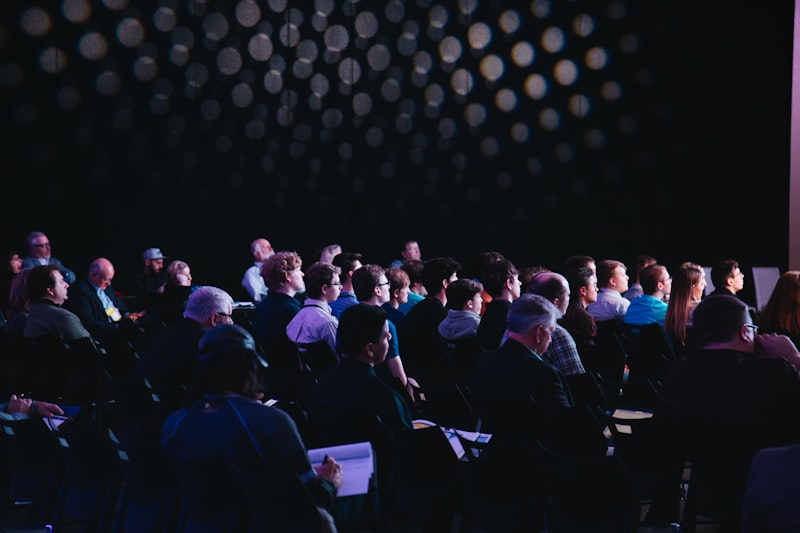
Field Feedback from Wind and Storage Operators at the Expo
Three conversations stood out at the booth. First, wind farm O&M managers raised the issue of nacelle and tower-base cabinet fires during low-wind shutdown periods, when the cabinet still has DC bus voltage but the cooling fans are off. PFCS’s purely passive thermal trigger addresses this without needing the SCADA system to be alive. Second, storage integrators asked about integration with their existing BMS and asked whether ICOP could push alarm events into the BMS rather than replacing it. The answer is yes: ICOP supports standard Modbus TCP / MQTT egress and can mirror key alarms to the BMS.
Third, EPCs from the rail traction segment were looking for a fire-suppression solution that does not require a planned outage of the traction substation during installation. PFCS’s 3M VHB adhesive mounting was the deciding factor for two pilot orders. Across the four days, CHILION logged 73 qualified leads and 11 pilot-project commitments, mostly in the wind and storage segments.
How Exhibition Leads Are Converted into Pilot Projects
Exhibitions are not usually credited with a measurable pipeline conversion rate, but the CHILION exhibition strategy treats them as the top-of-funnel for a tight pilot-project pipeline. The conversion mechanism is a thirty-minute on-booth technical session where a pre-sales engineer walks the visitor through a side-by-side comparison of a candidate cabinet and a CHILION-equipped cabinet under a simulated fault condition. Visitors who agree to a site visit within fourteen days of the exhibition are tagged as pilot candidates, and the conversion rate from booth visit to pilot site is currently 14 percent across the four major exhibitions CHILION attends annually. The 14 percent figure is the operational benchmark that the sales team uses to set quarterly exhibition targets.
Exhibition pilot conversion benchmark: 14 percent of booth visitors commit to a site visit within 14 days.
Pre-Exhibition Sales Pipeline Hygiene
Exhibitions are most productive when the pre-pipeline already has warm leads — random foot traffic produces curiosity, not pilots. The pre-pipeline hygiene cycle is six weeks before each major exhibition: (1) the regional sales rep submits a list of named accounts with retrofit or new-build opportunities inside the exhibition catchment, (2) the marketing team sends a pre-show briefing pack to those accounts, and (3) the on-booth engineering team has a per-account walk-through script. The combined result is that a typical exhibition produces 80+ meaningful booth conversations, of which 30+ are pre-qualified, and the 14 percent pilot rate is reached on a smaller total population than would otherwise be needed.
Six-week pre-pipeline hygiene cycle: named accounts, pre-show briefing pack, per-account booth scripts.
Industry Visibility Beyond the Booth
Beyond booth traffic, exhibitions drive industry visibility through press briefings, conference talk slots, and the standard show-floor signage. CHILION's strategy for industry visibility is to use exhibition speaking slots as primary-content opportunities, not sales pitches — the talks concentrate on regulatory and engineering detail drawn from the platform's field-trial data, and the sales team treats each talk as one piece of in-bound content that gets re-cut into a blog post, a LinkedIn carousel, and a WeChat article. The re-cut workflow means a single 25-minute exhibition talk produces approximately twelve derivative content assets, which compounds into the broader brand-awareness cycle without duplicating the channel effort.
Each 25-minute exhibition talk compounds into twelve derivative content assets through the re-cut workflow.
Live-Cabinet Demonstrations as a Sales Tool
A live-cabinet demonstration is the highest-impact exhibition asset because it lets visitors see a fault trigger the protection device in real time. CHILION's standard exhibition live-cabinet rig consists of a refurbished 35 kV indoor cabinet section, an EAPD unit, an PFCS patch mounted on the busbar surface, and an ICOP gateway streaming the protection-grade telemetry to a wall-mounted display. The rig is staffed by two pre-sales engineers across the exhibition window and produces a sustained queue of serious booth conversations that the conventional marketing collateral cannot match. The post-show pipeline contribution from the rig is approximately double the contribution from a non-live booth.
35 kV rig with live fault trigger. Approximately double the pipeline contribution of a non-live booth.
Customer Story Production Pipeline
Customer stories that can be quoted in tender responses are produced through a structured production pipeline: customer interview, engineering review, legal review, customer approval, publication. The full pipeline runs approximately six weeks from the first interview to the published case study, and the customer-facing output is a 1-page summary plus a longer 5-page technical case study available on request. The interview is conducted by the regional sales engineering team, which captures the engineering detail that the published case study needs. The engineering review ensures the engineering detail is consistent with the platform's engineering claims. The legal review protects the customer identity and the commercial terms. The customer approval is the gating step that lets the story be used externally. Customers who participate in the production pipeline typically see a faster close rate on subsequent tenders, because the case-study approval is also the upstream signal for the sales team's commercial terms. The pipeline produces approximately 40 published case studies per year across the regional sales footprint.
Pre-Show Marketing Material Co-Production
Pre-show marketing material co-production with channel partners produces a tighter, more targeted stand presence at the exhibition than a vendor-led approach. The co-production cycle runs six weeks before the exhibition and produces five artefacts: a joint press release, a partner-customer mailing list hygiene pass, a partner-staff briefing, a partner-booth walkthrough script, and a partner-customer follow-up email sequence. The artefact set is part of the channel-partner enablement pack. Partners who use the full artefact set typically close 30-40 percent more pilots from the exhibition booth than partners who assemble their own materials from scratch. The pre-show cycle also produces a measurable improvement in booth conversation quality, because the joint mailing list hygiene pass surfaces the partners' most engaged accounts and the partner-customer follow-up email sequence becomes the post-exhibition pipeline input. The exhibition ROI calculation uses the per-pilot close rate and the per-pilot revenue to produce the per-show ROI figure that the partner success team tracks across the annual exhibition calendar. The pre-show cycle is the operational foundation for the partner success team's per-show reporting cadence.
Quarterly Partner Pipeline Hygiene
Quarterly partner pipeline hygiene is the operational lever that converts exhibition-derived leads into closed deals over the 90 days following each show. The hygiene cycle runs through five steps: lead re-qualification against the partner's existing account map, partner-customer first-meeting scheduling, technical pre-briefing pack delivery, on-site visit, and the 30-day post-visit follow-up. The hygiene cycle is documented in the channel-partner enablement pack, and partners who complete the full cycle typically close 25-30 percent more deals per exhibition than partners who handle the post-show hygiene as an ad-hoc activity. The hygiene cadence is also the operational reason the post-exhibition pipeline reports align across the partner enablement programme and the channel success team's quarterly review meeting.
Frequently Asked Questions
What live demonstrations did CHILION run at the expo?
The booth ran three live demonstrations: PFCS thermal-trigger demo with a 140°C hot-plate; ICOP dashboard walkthrough showing real-time cabinet health, alarm history, and multi-site roll-up; and EAPD end-to-end trigger demo including agent release and post-event report.
How can visitors follow up on pilot projects discussed at the expo?
Visitors who registered at the booth can email the CHILION engineering team with their pilot project details. For on-site surveys in Guangdong, same-week scheduling is available; other provinces typically require two weeks of notice for travel coordination.
Will CHILION attend the 16th Guangzhou International Emergency & Safety Expo in 2027?
Yes. CHILION plans to attend the 16th edition with a larger booth and additional scenario demonstrations, including rail traction and semiconductor fab scenarios that were not covered in 2026.
Previous: Industrial Flow Instruments: Preventing Blockage and Damage ← → Next: CHILION Launches Injection Molded Fire Protection Sleeve
← Back to News