Selecting the Right Layer of Protection for a Given Cabinet Population
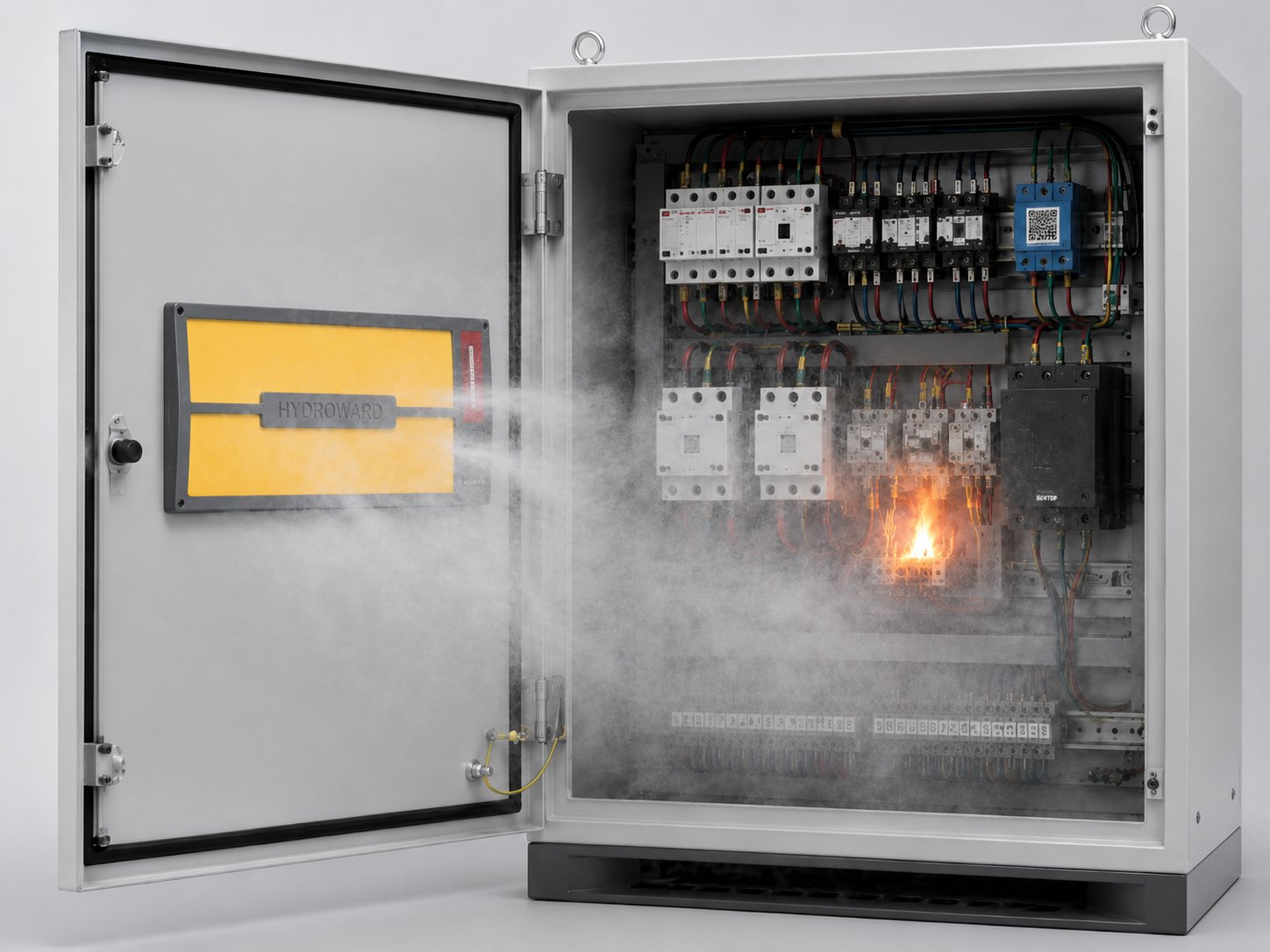
Every cabinet population is different. A retrofit panel farm in a refurbished textile mill faces different drivers than a greenfield container-yard switchboard. CHILION categorizes cabinets along three axes: criticality, fault-history, and environmental exposure. Critical cabinets that have experienced prior fault events belong on EAPD instrumentation from the outset. Less critical cabinets can be managed through ICOP risk scoring for one or two budget cycles, then upgraded to active hardware when the data justifies it. Environmentally harsh cabinets, such as those near furnace exhaust or in coastal salt-spray zones, usually warrant hardware attention first because their failure rate outpaces the inspection cycle. Mapping cabinet population to protection tier before equipment selection is the single highest-leverage step in a procurement conversation. It produces a defensible rationale that auditors and insurance carriers both respect, and it avoids over-equipping benign cabinets while under-equipping the ones that matter.
A Practical Procurement Workflow for Electrical Safety Upgrades
Most buyers start a procurement workflow after a triggering incident: a burned neutral, a flash report from a peer site, or a new compliance deadline. The most effective buyers invert that workflow. They inventory cabinets, score them, rank them, and then allocate capital against the ranking. CHILION's advisory team supports this approach by supplying risk-model templates and sample scoring matrices at no charge during the early-engagement phase. Once the portfolio is ranked, the next step is to separate hardware spend from monitoring spend. EAPD hardware has a one-time cost; ICOP monitoring has a recurring subscription. Each line item has a different budget owner in most enterprises, and acknowledging that distinction up front prevents stalled paperwork. The plan also reads more credibly to financial controllers.
Regulatory landscape and standards: Field Practice for Products
The regulatory landscape that applies to electrical-safety equipment continues to evolve, with periodic updates to IEC, GB, and UL regimes and a corresponding need for the deployment to remain audit-ready across those updates. Our deployment documentation maps the current configuration to the applicable standards with version tags, so a future audit can quickly verify that the deployment still satisfies the regime in force at the time of inspection.
Which standards apply to a typical deployment?
This section reflects the deployment practice we've refined across the installed base. Customers who want more detail on the specific topic for their site can request a focused engagement through the contact form on our contact page.
Field feedback and product roadmap: Field Practice for Products
Field feedback from across our installed base flows into our quarterly product-development cycle. Customers who participate in our field-feedback program see their observations reflected in subsequent firmware revisions, configuration improvements, and accessories. This is the loop that distinguishes a vendor with an installed base from a vendor with a marketing channel: the latter collects feedback into a presentation, the former collects feedback into a roadmap.
How is field feedback used in product development?
This section reflects the deployment practice we've refined across the installed base. Customers who want more detail on the specific topic for their site can request a focused engagement through the contact form on our contact page.
Engineering tradeoffs: Field Practice for Products
Choosing among equally defensible engineering tradeoffs is part of the work that experienced teams do well and that newer teams sometimes sidestep. In our deployment practice we walk customers through the tradeoff space, document the chosen path with its rationale, and revisit the choice at every annual review. This deliberate approach reduces the kind of regret that surfaces when original assumptions were not stated plainly.
What does a deployment review look like?
This section reflects the deployment practice we've refined across the installed base. Customers who want more detail on the specific topic for their site can request a focused engagement through the contact form on our contact page.
Regulatory landscape and standards: Field Practice for Products
The regulatory landscape that applies to electrical-safety equipment continues to evolve, with periodic updates to IEC, GB, and UL regimes and a corresponding need for the deployment to remain audit-ready across those updates. Our deployment documentation maps the current configuration to the applicable standards with version tags, so a future audit can quickly verify that the deployment still satisfies the regime in force at the time of inspection.
Which standards apply to a typical deployment?
This section reflects the deployment practice we've refined across the installed base. Customers who want more detail on the specific topic for their site can request a focused engagement through the contact form on our contact page.
Field feedback and product roadmap: Field Practice for Products
Field feedback from across our installed base flows into our quarterly product-development cycle. Customers who participate in our field-feedback program see their observations reflected in subsequent firmware revisions, configuration improvements, and accessories. This is the loop that distinguishes a vendor with an installed base from a vendor with a marketing channel: the latter collects feedback into a presentation, the former collects feedback into a roadmap.
How is field feedback used in product development?
This section reflects the deployment practice we've refined across the installed base. Customers who want more detail on the specific topic for their site can request a focused engagement through the contact form on our contact page.
Engineering tradeoffs: Field Practice for Products
Choosing among equally defensible engineering tradeoffs is part of the work that experienced teams do well and that newer teams sometimes sidestep. In our deployment practice we walk customers through the tradeoff space, document the chosen path with its rationale, and revisit the choice at every annual review. This deliberate approach reduces the kind of regret that surfaces when original assumptions were not stated plainly.
What does a deployment review look like?
This section reflects the deployment practice we've refined across the installed base. Customers who want more detail on the specific topic for their site can request a focused engagement through the contact form on our contact page.
Regulatory landscape and standards: Field Practice for Products
The regulatory landscape that applies to electrical-safety equipment continues to evolve, with periodic updates to IEC, GB, and UL regimes and a corresponding need for the deployment to remain audit-ready across those updates. Our deployment documentation maps the current configuration to the applicable standards with version tags, so a future audit can quickly verify that the deployment still satisfies the regime in force at the time of inspection.
Which standards apply to a typical deployment?
This section reflects the deployment practice we've refined across the installed base. Customers who want more detail on the specific topic for their site can request a focused engagement through the contact form on our contact page.
Regulatory landscape and standards: Field Practice for Products
The regulatory landscape that applies to electrical-safety equipment continues to evolve, with periodic updates to IEC, GB, and UL regimes and a corresponding need for the deployment to remain audit-ready across those updates. Our deployment documentation maps the current configuration to the applicable standards with version tags, so a future audit can quickly verify that the deployment still satisfies the regime in force at the time of inspection.
Which standards apply to a typical deployment?
This section reflects the deployment practice we've refined across the installed base. Customers who want more detail on the specific topic for their site can request a focused engagement through the contact form on our contact page.
Frequently Asked Questions
Can I start with monitoring and add hardware later?
Does the hardware integrate with third-party gateways?
Yes. EAPD outputs standard dry-contact and protocol-based interfaces. Customers using Modbus, IEC 61850, or BACnet can integrate without custom development.
How is consumable cost calculated for facilities using PFCS protective sheets?
PFCS sheets are not consumables in the conventional sense. They have a multi-year service life under normal conditions and do not require scheduled replacement.
Is there a sample scoring matrix available?
Yes, CHILION provides a downloadable risk-scoring template that walks a facilities team through cabinet rating across criticality, history, and exposure dimensions.