Published: July 27, 2026 · By CHILION Engineering Team
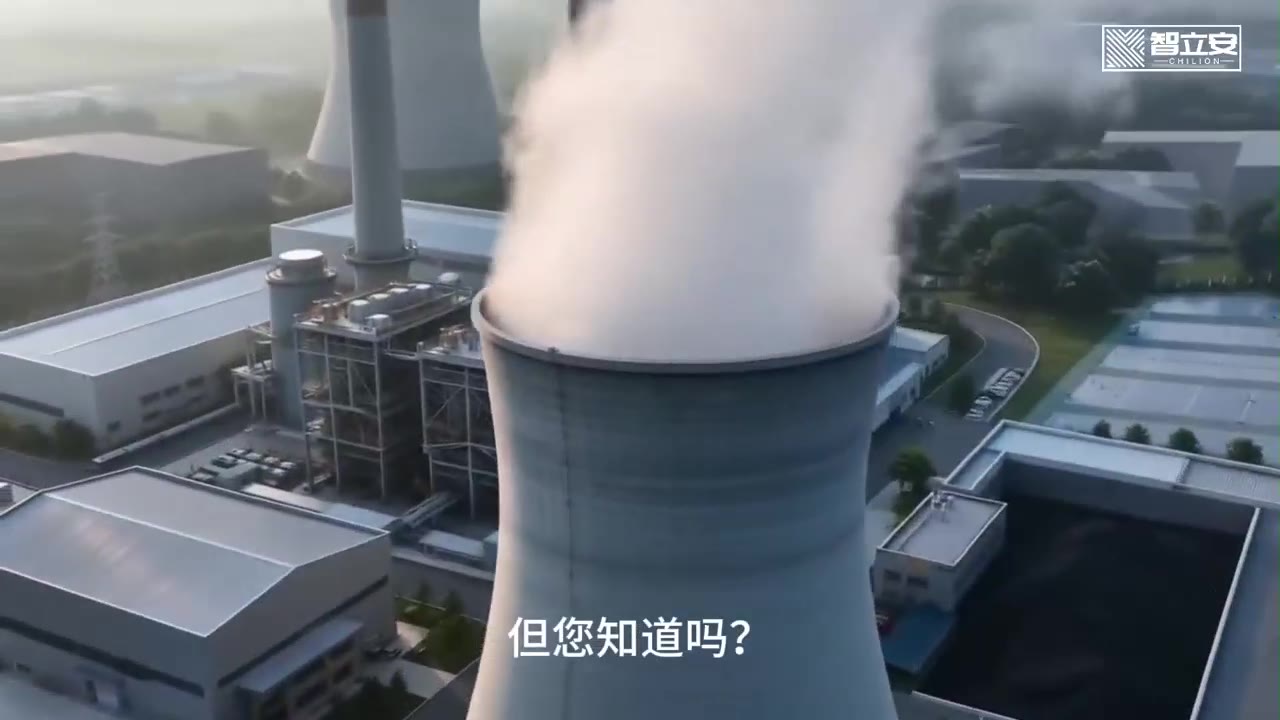
Thermal power plants have a relatively high level of fire protection among industrial facilities. The entire plant is equipped with gas suppression, water sprinklers, smoke detectors, and heat detectors — everything you would expect.
EAPD is installed inside cabinets to monitor and protect hard-to-reach areas, while the ICOP platform provides a plant-wide status dashboard.
But there is a problem: these systems cover large open spaces. Inside switchgear cabinets, deep within cable trenches, and inside control cabinets — these enclosed spaces are fire protection blind spots.
The EAPD+ICOP solution for power plants has a clear positioning: filling the gaps that plant-wide fire protection cannot cover; the ICOP platform brings scattered power distribution points under unified management.
Key Fire Protection Blind Spots in Power Plants
Inside switchgear cabinets. High and low-voltage switchgear cabinets have compact internal spaces, with circuit breakers, contactors, and busbars packed closely together. A single component fault that causes an arc can burn out the entire cabinet within minutes. Plant-wide fire systems only activate after smoke detectors detect smoke — but the delay from when smoke escapes the cabinet to when it reaches ceiling-mounted detectors is long enough for the fire inside the cabinet to grow out of control.
EAPD is installed inside each switchgear cabinet, with sensors directly monitoring heat sources. Before smoke ever reaches the ceiling, EAPD has already detected the anomaly inside the cabinet and completed fire suppression.
Cable trenches. Cables are densely arranged, and an overloaded cable that catches fire can quickly ignite adjacent cables. Cable trenches have narrow spaces that are difficult for personnel to access, making early fire detection very challenging.
EAPD is installed in dense cable areas, focusing on monitoring temperature and smoke. Its independent power supply design means deployment is unaffected even when there are no power points in the trench.
Control cabinets. DCS control cabinets, PLC cabinets, and relay protection cabinets — these are the "brain" of the power plant. A fire inside a control cabinet has far greater impact on plant operations than the fire damage itself.
EAPD+ICOP Deployment in Power Plants
Switchgear cabinets — one EAPD unit installed on the top or inner wall of each cabinet. Magnetic or snap-fit installation, no drilling required. Temperature, smoke, and infrared flame detection cover every angle inside the cabinet.
Cable trenches — EAPD units installed near dense cable areas. Since trenches typically lack power points, EAPD's independent power supply design is perfectly suited.
Control rooms — EAPD installed inside DCS cabinets and relay protection cabinets, without affecting the normal operation of control systems.
The ICOP platform connects all EAPD units. Plant electrical supervisors can view the real-time status of all switchgear cabinets, control cabinets, and cable trenches across the entire plant from the control room or on their mobile phones.
Alerts are pushed by severity level: general temperature anomalies are sent to the on-duty electrical operator; confirmed fires are simultaneously pushed to the shift supervisor and safety director.
Applicable Scenarios
- High and low-voltage switchgear in thermal power plants
- Cable trenches / cable ducts
- DCS control cabinets
- Relay protection cabinets
- Excitation cabinets / frequency converter cabinets
- Plant power distribution rooms
Generation Asset Protective Instrumentation
Power plant cabinets carry a particular protective responsibility because the upstream generation is a high-value asset whose protection depends on the integrity of the supporting electrical architecture. CHILION's power plant solution instruments those cabinets with the heavier protective profile required. The protective logic is configured for the rapid clearance requirements typical of generation-side equipment, and the device state is shared with the plant's wider protective system where the architecture permits. The deployment is structured to integrate with the plant's outage and inspection calendar so that instrument commissioning is performed during planned windows rather than during emergencies. Operators report that this discipline reduces disruption to plant operations and produces a deployment record that aligns with the plant's existing outage records.
Outage Coordination and Spare-Strategy Integration
Power plants run on a planned-outage schedule that governs most non-emergency electrical work. CHILION's deployment is timed to those windows, with crews following the plant's permit-to-work and lockout-tagout procedures. Spare-instrumentation strategy is structured around the plant's existing spare-parts policy, with spares held in the same manner as other protective-gear spares. The objective is a deployment that the plant's maintenance and procurement teams adopt into their standard processes with minimal overhead. Field experience suggests that this approach builds the trust necessary to deploy additional instrumentation in subsequent outage windows, accelerating the protective-program roadmap.
Generation Asset Protective Instrumentation
Power plant cabinets carry a particular protective responsibility because the upstream generation is a high-value asset whose protection depends on the integrity of the supporting electrical architecture. CHILION's power plant solution instruments those cabinets with the heavier protective profile required. The protective logic is configured for the rapid clearance requirements typical of generation-side equipment, and the device state is shared with the plant's wider protective system where the architecture permits. The deployment is structured to integrate with the plant's outage and inspection calendar so that instrument commissioning is performed during planned windows rather than during emergencies. Operators report that this discipline reduces disruption to plant operations and produces a deployment record that aligns with the plant's existing outage records.
Outage Coordination and Spare-Strategy Integration
Power plants run on a planned-outage schedule that governs most non-emergency electrical work. CHILION's deployment is timed to those windows, with crews following the plant's permit-to-work and lockout-tagout procedures. Spare-instrumentation strategy is structured around the plant's existing spare-parts policy, with spares held in the same manner as other protective-gear spares. The objective is a deployment that the plant's maintenance and procurement teams adopt into their standard processes with minimal overhead. Field experience suggests that this approach builds the trust necessary to deploy additional instrumentation in subsequent outage windows, accelerating the protective-program roadmap.
Frequently Asked Questions
When is instrument commissioning performed?
How does the spare-strategy integrate with the plant's policy?
Spare instrumentation follows the plant's existing spare-parts policy, with spares held in the same manner as other protective-gear spares.
Is the protective logic tuned for generation-side equipment?
Yes, the logic is configured for the rapid clearance requirements typical of generation-side service.
What is the typical deployment scale?
Deployments scale from a single generating unit to fleet-wide rollouts, with configurations tuned to each scale's operational pattern.
Frequently Asked Questions
When is instrument commissioning performed?
How does the spare-strategy integrate with the plant's policy?
Spare instrumentation follows the plant's existing spare-parts policy, with spares held in the same manner as other protective-gear spares.
Is the protective logic tuned for generation-side equipment?
Yes, the logic is configured for the rapid clearance requirements typical of generation-side service.
What is the typical deployment scale?
Deployments scale from a single generating unit to fleet-wide rollouts, with configurations tuned to each scale's operational pattern.
FAQ
Need a deployment plan for EAPD Electrical Active Protection Device + ICOP Platform in thermal power plants?
Contact CHILIONService Hotline: 400-8558-313