Published: July 17, 2026 · By CHILION Engineering Team
Fire safety in solar power plants — honestly, many people don't pay much attention to it.
EAPD is installed inside inverters for in-cabinet protection, and the ICOP platform remotely manages the entire plant.
People assume solar installations are outdoors and wide open, so even if something catches fire, there's not much to burn. But the reality is: devices like inverters and combiner boxes have extremely limited internal space. Once an arc fault occurs on the DC side, the temperature rises instantly. The equipment casing is metal — by the time you see fire on the outside, the inside is already burned through.
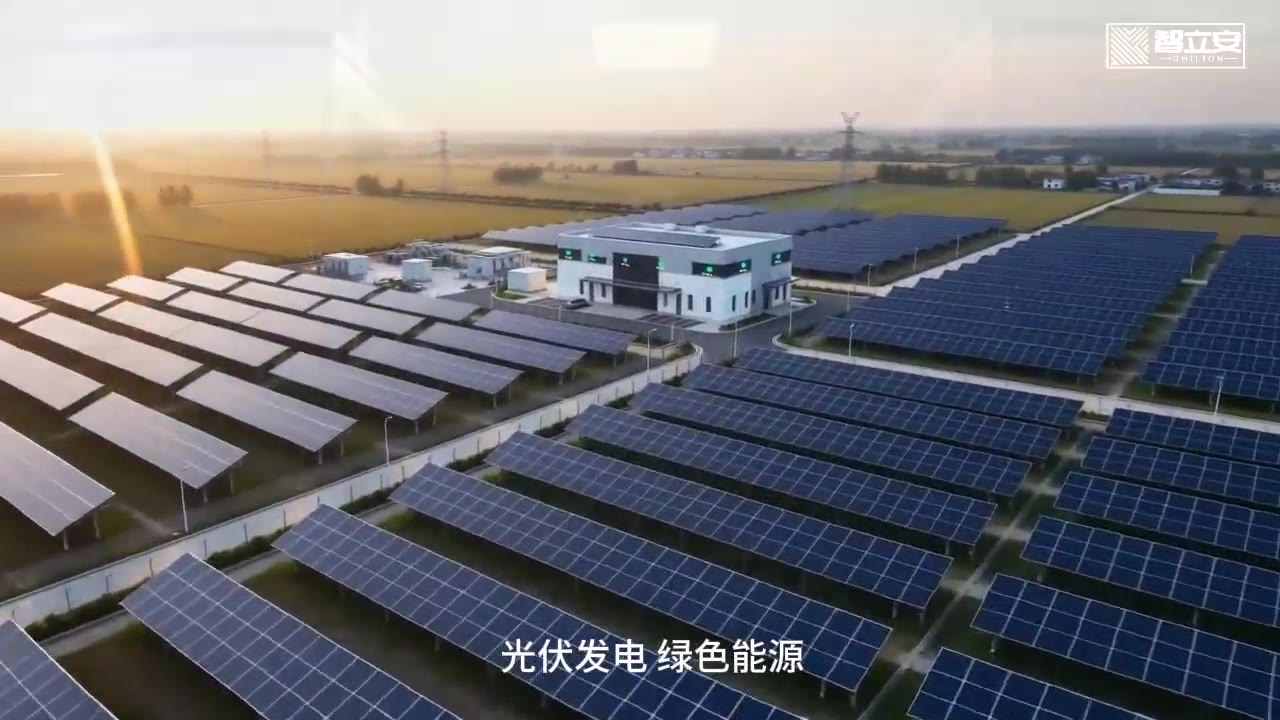
The pain points of solar projects are clear: scattered equipment, outdoor environments, and minimal on-site maintenance.
The EAPD+ICOP solution for this scenario: one EAPD unit installed inside each device for local detection and suppression, with the ICOP platform remotely managing the entire plant.
Three Key Characteristics of Solar Scenarios — and How EAPD+ICOP Addresses Them
Scattered equipment. A single power plant can have hundreds of inverters spread across dozens of acres. Traditional fire protection cannot equip every single device.
EAPD operates on a one-per-device basis — one unit installed inside each inverter or combiner box. The ICOP platform aggregates all EAPD data onto a single dashboard, so operators can monitor the real-time status of all electrical equipment across the entire plant from the control room.
Outdoor environments. In summer, internal inverter temperatures can reach 70-80°C; in winter, they drop well below freezing.
EAPD operates across a temperature range of -20°C to +150°C, fully covering these conditions. EAPD also features independent power supply — enabling active detection that can identify anomalies before a fire even starts.
Minimal on-site maintenance. Solar power plants have small operations teams, with inspections only every few months.
EAPD+ICOP solves this problem: EAPD runs autonomously on-site without relying on manual intervention; the ICOP cloud platform handles alarms 24/7.
When any inverter shows abnormal temperature trends, ICOP pushes alerts in advance so operators can schedule planned maintenance. If a fire has already ignited — EAPD suppresses it directly on-site while simultaneously alerting ICOP.
Installation
Inside inverters — EAPD is affixed near the heat sink or above the IGBT module. Inside combiner boxes — it is placed next to the terminal block. Its compact size does not block airflow or affect heat dissipation.
Installation is simply peel-and-stick with the adhesive backing. No power outage is required — the device itself does not interfere with existing circuits. After installation, a self-test confirms operation; there is no configuration process.
EAPD features an active design and operates 24 hours a day. It monitors load anomalies during daytime solar generation and temperature anomalies at night when no power is being generated. Anomalies can be detected at any time.
Applicable Scenarios
- Centralized solar power plant inverters
- Distributed solar inverters / combiner boxes
- String inverters
- Solar step-up box transformers
- Distribution equipment for agrivoltaics / aquavoltaics projects
Roof-Mounted Cabinet Density and Roof Load Considerations
Roof-mounted solar installations face a protective challenge that is distinct from ground installations: the cabinets are distributed across roof surfaces that may already be near load limits, and access for instrumentation maintenance is constrained by the roof's own access arrangements. CHILION's solar solution specifies equipment that fits the roof geometry and respects the load profile of the host building. Sensor housings are low-profile, and cabling is routed in a manner that does not interfere with the building's existing roof penetrations. Maintenance visits are bundled with the customer's existing roof inspections where the access calendar permits, so the protective-device deployment does not generate additional roof traffic. The result is an instrumentation program that the building owner's facilities team adopts with minimal disruption.
Inverter Coordination and Rapid-Disconnect Requirements
Solar installations are governed by grid-code rapid-disconnect requirements that define how quickly the installation must isolate from the grid on utility command. CHILION's protective logic is configurable to those requirements and is documented as part of the deployment record. The instrumentation's state is shared with the inverter's own monitoring system through standard protocols, so the operations team reads the cabinet state alongside the inverter telemetry in a single view. Field experience suggests that this unified view accelerates the operations team's response during grid events and supports a faster post-event assessment. The deployment record documents the coordination with the inverter vendor so the alignment is auditable.
Roof-Mounted Cabinet Density and Roof Load Considerations
Roof-mounted solar installations face a protective challenge that is distinct from ground installations: the cabinets are distributed across roof surfaces that may already be near load limits, and access for instrumentation maintenance is constrained by the roof's own access arrangements. CHILION's solar solution specifies equipment that fits the roof geometry and respects the load profile of the host building. Sensor housings are low-profile, and cabling is routed in a manner that does not interfere with the building's existing roof penetrations. Maintenance visits are bundled with the customer's existing roof inspections where the access calendar permits, so the protective-device deployment does not generate additional roof traffic. The result is an instrumentation program that the building owner's facilities team adopts with minimal disruption.
Inverter Coordination and Rapid-Disconnect Requirements
Solar installations are governed by grid-code rapid-disconnect requirements that define how quickly the installation must isolate from the grid on utility command. CHILION's protective logic is configurable to those requirements and is documented as part of the deployment record. The instrumentation's state is shared with the inverter's own monitoring system through standard protocols, so the operations team reads the cabinet state alongside the inverter telemetry in a single view. Field experience suggests that this unified view accelerates the operations team's response during grid events and supports a faster post-event assessment. The deployment record documents the coordination with the inverter vendor so the alignment is auditable.
Frequently Asked Questions
How is the roof load respected?
Is rapid-disconnect configurable?
Yes, the protective logic is configurable to the rapid-disconnect requirements of the applicable grid code.
How is the cabinet state coordinated with inverter telemetry?
The instrumentation publishes its state through standard protocols so the operations team reads both in a single view.
What is the typical deployment scale?
Deployments range from small commercial roofs to utility-scale installations.
Frequently Asked Questions
How is the roof load respected?
Is rapid-disconnect configurable?
Yes, the protective logic is configurable to the rapid-disconnect requirements of the applicable grid code.
How is the cabinet state coordinated with inverter telemetry?
The instrumentation publishes its state through standard protocols so the operations team reads both in a single view.
What is the typical deployment scale?
Deployments range from small commercial roofs to utility-scale installations.
FAQ
Need a deployment plan for EAPD Electrical Active Protection Device + ICOP Platform at your solar power plant?
Contact CHILIONService Hotline: 400-8558-313