Published: July 20, 2026 · By CHILION Engineering Team
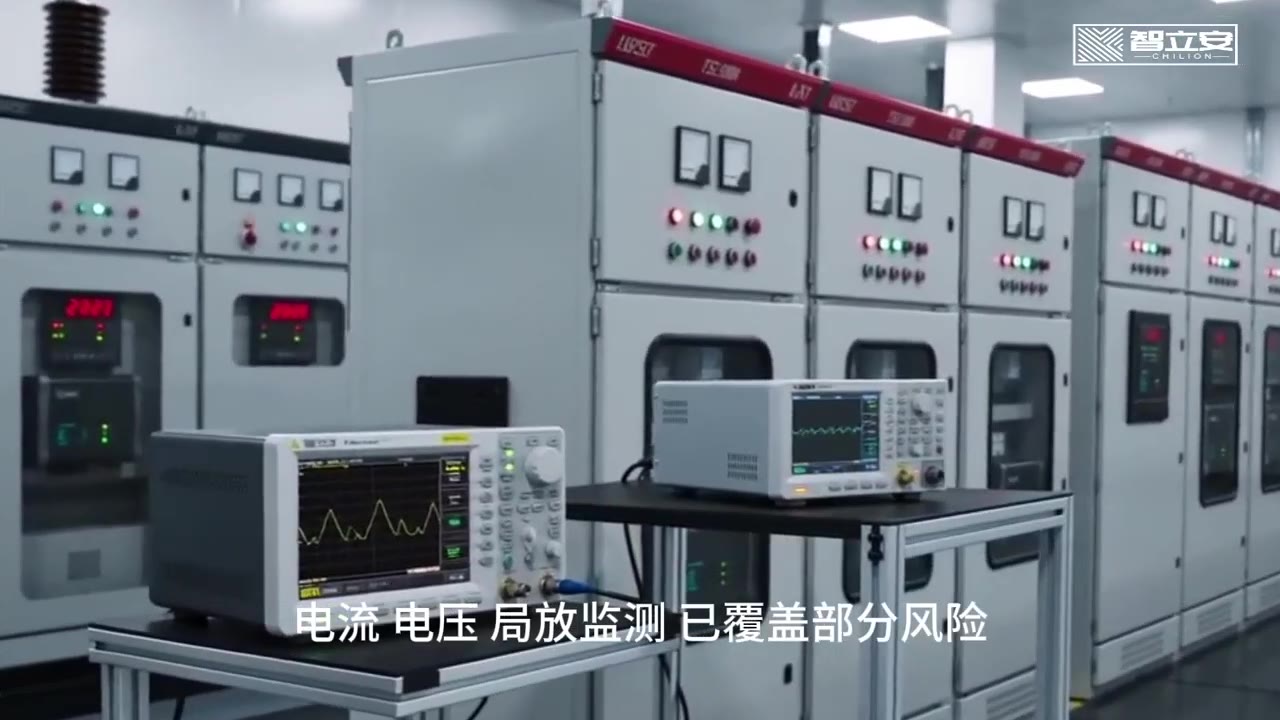
Power distribution and substation rooms serve as the power supply hub for entire buildings or industrial parks.
EAPD is installed inside switchgear cabinets for local monitoring and fire suppression, while the ICOP platform centrally manages multiple substation rooms from the cloud.
High-voltage to low-voltage conversion and distribution to each floor and zone — all happen in this room. There are many switchgear cabinets, dense wiring, and heavy loads. Combined with typically limited space and average ventilation, high-voltage and low-voltage cabinets are packed closely together. When one cabinet develops a problem, surrounding cabinets heat up in turn.
Deployment approach for substation rooms: EAPD is installed in each switchgear cabinet for real-time monitoring and on-site fire suppression, while the ICOP platform remotely manages multiple substation rooms.
Risk Checklist for Substation Rooms
High-voltage cabinets. In the event of an internal arc fault, the energy released is enormous. While the cabinet itself provides protection, an internal fire can still ignite adjacent cabinets.
Low-voltage distribution cabinets. Loads are concentrated, with circuit breakers, contactors, and busbars densely arranged. A fault spark from any component can trigger a fire inside the cabinet.
Transformer rooms. Oil-immersed transformers carry leakage risks, while dry-type transformers carry overheating risks. Both require continuous monitoring.
Cable trenches / cable layers. Incoming and outgoing cables are densely packed — a fault in one cable can affect the entire bundle.
A problem at any of these locations affects not just one distribution room, but the power supply of the entire building.
EAPD Deployment in Substation Rooms
One EAPD unit is installed on the top or inner wall of each switchgear cabinet. Magnetic or snap-on installation requires no drilling into the cabinet body.
EAPD itself integrates multiple sensors including temperature, humidity, smoke, CO, H₂S, and infrared flame detection. Various parameters inside the cabinet are collected in real time, with on-board AI performing cross-validation.
Abnormal temperature rise, smoke detection, or excessive combustible gas concentration — when any early warning signal is detected, EAPD assesses locally and, upon confirmation, releases extinguishing agent within milliseconds. The entire process completes inside the cabinet without affecting other cabinets or equipment outside the room.
Value of the ICOP Platform in Multi-Site Management
A large industrial park may have multiple substation rooms — main distribution rooms, sub-distribution rooms, power distribution rooms — scattered across different buildings.
The ICOP platform connects all EAPD devices into a single network. Operations staff can view the real-time status of all distribution rooms and all switchgear cabinets from the control room or on their mobile phones.
Alert escalation: general anomalies are pushed to on-duty electricians, while confirmed fire alerts are simultaneously pushed to safety supervisors and park management.
ICOP also does one more thing — event logging. The time of each alert, sensor readings, and handling results — all are automatically archived. This is useful for periodic safety reports and emergency plan optimization.
The EAPD+ICOP combination solves two core problems in substation room scenarios: "what's invisible inside cabinets" and "managing across multiple sites".
Applicable Scenarios
- Commercial building substation rooms
- Industrial plant distribution rooms
- Residential community distribution rooms
- Office building substations
- Rail transit traction substations
Substation Cabinet Asset-Records Integration
Substation cabinets are tracked in the asset records of the operating utility, and the protective-device deployment must integrate with those records rather than produce a parallel system. CHILION's deployment methodology produces asset records in the formats the operating utility uses. Cabinet identifiers, drawing references, and the protective-device hierarchy are mapped to the utility's asset-management framework so the records can be imported directly. The benefit is a deployment that the utility's asset team adopts with minimal friction and that supports subsequent inspections, audits, and asset-decision processes without reformatting. Operators who have been through this integration report that the asset team's quarterly review proceeds with less preparation overhead.
Outdoor Substation Hardware Selection
Outdoor substations expose their cabinets to weather, dust, and temperature swings across the seasonal cycle. The protective-device selection for these environments specifies housings, sensors, and cabling that are rated for those conditions. Hardware variants are documented for coastal, desert, and temperate climates, with the appropriate variant selected during the design review based on the specific substation's location. The deployment documentation records the variant selection rationale so that subsequent inspection and replacement decisions can refer back to the original consideration. Field experience suggests that this disciplined specification reduces hardware-failure incidence in outdoor substations compared with generic selections.
Substation Cabinet Asset-Records Integration
Substation cabinets are tracked in the asset records of the operating utility, and the protective-device deployment must integrate with those records rather than produce a parallel system. CHILION's deployment methodology produces asset records in the formats the operating utility uses. Cabinet identifiers, drawing references, and the protective-device hierarchy are mapped to the utility's asset-management framework so the records can be imported directly. The benefit is a deployment that the utility's asset team adopts with minimal friction and that supports subsequent inspections, audits, and asset-decision processes without reformatting. Operators who have been through this integration report that the asset team's quarterly review proceeds with less preparation overhead.
Outdoor Substation Hardware Selection
Outdoor substations expose their cabinets to weather, dust, and temperature swings across the seasonal cycle. The protective-device selection for these environments specifies housings, sensors, and cabling that are rated for those conditions. Hardware variants are documented for coastal, desert, and temperate climates, with the appropriate variant selected during the design review based on the specific substation's location. The deployment documentation records the variant selection rationale so that subsequent inspection and replacement decisions can refer back to the original consideration. Field experience suggests that this disciplined specification reduces hardware-failure incidence in outdoor substations compared with generic selections.
Frequently Asked Questions
How does the asset-records integration work?
Is the hardware rated for outdoor use?
Yes, hardware variants are specified for coastal, desert, and temperate climates.
What is the typical deployment scale?
Deployments range from a single substation to fleet-wide rollouts across a utility's service territory.
How is documentation maintained over time?
Documentation is maintained in the utility's standard record formats and references the original variant selection rationale.
Frequently Asked Questions
How does the asset-records integration work?
Is the hardware rated for outdoor use?
Yes, hardware variants are specified for coastal, desert, and temperate climates.
What is the typical deployment scale?
Deployments range from a single substation to fleet-wide rollouts across a utility's service territory.
How is documentation maintained over time?
Documentation is maintained in the utility's standard record formats and references the original variant selection rationale.
FAQ
Need a deployment plan for EAPD Electrical Active Protection Device + ICOP Platform in substation rooms?
Contact CHILIONService Hotline: 400-8558-313