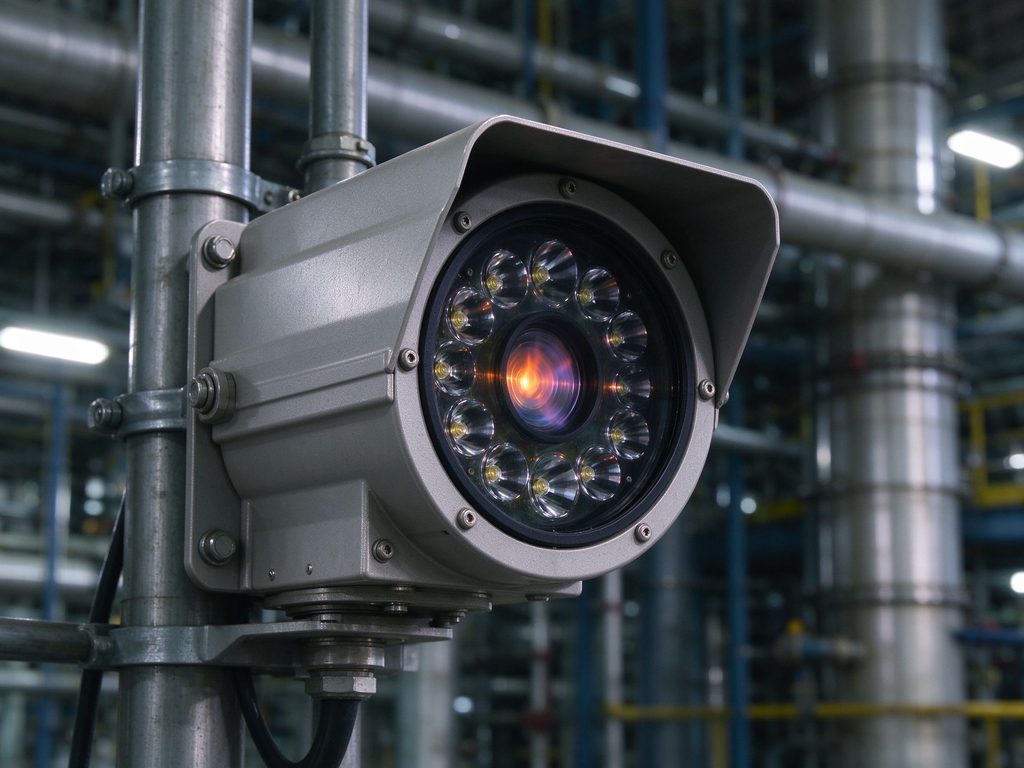
Bottom line: CLC-20 detects open flame by optical radiation instead of waiting for smoke, using synchronized UV, IR, and visible channels with layered algorithms to cut single-band false alarms in demanding industrial environments.
Why single-band flame detection is not enough
Flame detection moved from single-band to multi-band designs over time. Early UV-only units capture 185–260 nm radiation and respond quickly, but lightning, arc welding, X-rays, and strong solar UV can trigger false alarms. IR detectors targeting the 4.3 µm CO₂ emission peak resist some interference yet still struggle to separate flame from hot surfaces such as furnaces or IR heaters.
A single optical band cannot capture the full physics of combustion. CLC-20 therefore samples UV, IR, and visible channels together and cross-checks them—similar to combining multiple clinical tests rather than relying on temperature alone.
UV (185–260 nm) picks up radical-driven emission even in very early burning before flame is visible. IR at 4.3 µm tracks CO₂ combustion peaks with natural immunity to solar interference in that band. Visible (400–700 nm) analyzes flicker at roughly 1–10 Hz from turbulent combustion—behavior steady lamps and heaters lack.
Core algorithms: fusion and false-alarm control
The local processor samples all three bands at 100 Hz—300 data points per second. Pre-processing removes DC offset, extracts AC components, and computes band energy ratios and spectral features. Feature extraction covers flicker frequency, rise slope, inter-band energy ratios, pulse duration, and more.
Decision logic uses staged validation: per-band threshold checks; cross-band confirmation requiring at least two bands abnormal before escalation (single-band events are logged only); and pattern matching against trained flame models before alarm output.
Models draw on large CHILION lab datasets spanning fuels from gasoline and diesel to cable insulation, plus interferers such as sunlight, lamps, welding, and IR heat sources. Under standard lab conditions, detection rate on real flames exceeds 98% with false alarms below about 0.1 events per unit per year.
Typical applications: storage to petrochemical plants
In battery energy-storage sites, thermal runaway can produce open flame while electrolyte sprays and before smoke density triggers conventional smoke detectors. CLC-20 can recognize flame within about three seconds of appearance, enabling faster linkage to suppression. Typical cabin layouts use two to four units at diagonal ceiling positions for coverage.
Petrochemical deployments cover tank farms, process areas, pump zones, and loading bays where fires start fast and burn hot. Millisecond-class response pairs with fixed water monitors or foam systems for early intervention. In one petrochemical field test cited in product material, response to a small 0.1 m² pool fire at 25 m was 2.4 seconds—faster than many heat-cable or smoke-only schemes.
Industrial halls—welding bays, paint shops, warehouses—benefit from 120° horizontal and 90° vertical fields so one head covers more floor area. IP66 rating supports dusty environments without extra enclosures.
Power applications include substations, converter stations, and cable tunnels where electrical fires escalate quickly. Mounting above switchgear or along cable trays adds optical early warning compared with some distributed heat-sensing options.
System synergy with EAPD and ICOP
CLC-20 is a sensing node in CHILION's active protection stack alongside PFCS patches, EAPD devices, and ICOP platform—closing detect, assess, suppress, and manage loops.
PFCS handles joint-level passive suppression; EAPD handles cabinet-level active logic; CLC-20 covers open spaces patches cannot reach—storage cabins, whole switchrooms, tank areas. Alarms can drive relays, EAPD sequences, and ICOP notifications including SMS and third-party fire panels.
On ICOP, operators see live status, alarm history, and self-test results on one map, with interfaces toward video, SCADA, and existing fire alarm hosts where projects require fusion.
Specifications and installation notes
Rated range examples under CHILION lab conditions include about 30 m on a 0.1 m² gasoline fire and 20 m on 0.05 m² n-heptane; field performance varies with environment. Recommended mounting height is 2–12 m; at 6 m, ground coverage radius is roughly 10 m. Response under standard test fire is under 3 s; operating temperature −40 °C to +70 °C; IP66; DC 24 V (18–30 V); standby power under 1 W, alarm under 2 W.
Wall, ceiling, and pole mounts use adjustable brackets. Outputs include configurable relay contacts, RS485 Modbus RTU, and optional 4G uplink.
Keep at least 1 m from strong EMI sources such as large VFDs or bare busbars; avoid fixed obstructions in the field of view; do not aim directly at skylights that inject sunlight; daisy-chain RS485 where multiple heads share one route to save cabling.
FAQ
Q: How is CLC-20 different from smoke detectors?
Smoke detectors wait for particulates to reach the sensor. CLC-20 reads flame radiation directly, which can appear before dense smoke in some electrical or liquid-fuel events.
Q: Can CLC-20 tie into ICOP or existing fire panels?
Yes. Relay, RS485 Modbus, and optional 4G paths support linkage to EAPD, ICOP, and third-party alarm hosts depending on project design.
Q: What environments suit CLC-20?
High-risk indoor or semi-enclosed areas such as energy-storage cabins, petrochemical process zones, industrial workshops, substations, and cable tunnels where fast open-flame detection is required.
Q: Who should I contact for sizing and layout?
Call CHILION at 400-8558-313 with ceiling height, room geometry, and hazard type so engineers can propose detector count and mounting positions.