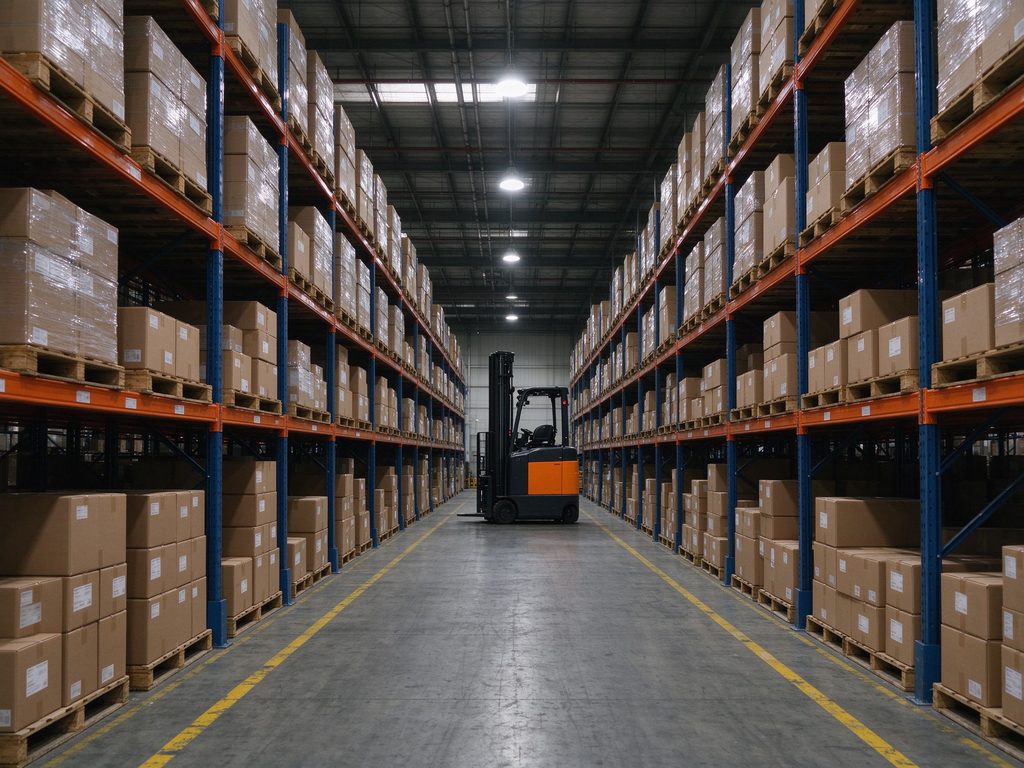
Bottom line: A logistics warehouse scenario stacks combustible stock with continuous sortation and battery charging. Electrical safety means controlling charging zones and sortation equipment as priority ignition points, then keeping site fire systems intact.
Safety characteristics of logistics warehousing
Warehouses concentrate cardboard, plastics, textiles, and other combustibles; a fire can grow fast and costly. Lighting, sortation, forklift charging, cold-chain plant, and HVAC keep electrical load high for long hours.
Automated sortation, conveyors, AGVs, and manipulators add complex controls. Charging for electric forklifts, AGVs, and movers introduces lithium-related fire risk. People, vehicles, and machines cross in the same space, so equipment can take mechanical damage. High-bay geometry also changes sprinkler, detection, and egress design needs.
Main electrical risks
Sortation machines and conveyors run long cycles; motors, control cabinets, and sensors can overheat or short. Charging areas face charger faults, battery heat, overcharge, and thermal runaway. Dense high-power lighting can age wiring and heat fixtures.
Warehouse switchrooms and panels may overload or develop hot joints. Field cables can be damaged by traffic. Forklifts and lift platforms add mobile electrical faults. Cold-chain compressors and motors run continuously with heat-rejection needs. Illegal extensions and unauthorized high-power charging inside the warehouse remain a common gap.
Charging-zone management
Set charging areas apart with ventilation, clear marking, and separation from stock and egress paths. Install qualified chargers and sockets with overcharge protection and scheduled inspection.
Charge lithium batteries to procedure—no overcharge or mixed improper charging; remove swollen or hot cells promptly and recycle end-of-life batteries correctly. Provide suitable extinguishers, blankets or dedicated means for lithium events, smoke/heat alarm, and PFCS patches for temperature-triggered local release. Assign charging ownership, logs, training, patrols during charge cycles, and drills for isolation and suppression.
Sortation equipment management
Maintain sorters, conveyors, and AGVs on schedule—motors, drives, and control cabinets—and avoid overload running. Check cabinet joints with infrared temperature checks, insulation, and guards. Keep overload, short-circuit, residual-current, and e-stop protection reliable.
Clear dust and debris that block cooling. Maintain grounding and static control where friction builds charge. Monitor current and temperature on critical lines and place PFCS in related distribution cabinets. Train operators, keep equipment zones orderly, and link fire alarm to equipment stop where designed.
Warehouse fire management that supports electrical safety
Keep automatic alarm, sprinklers, hydrants, extinguishers, and smoke control in service. Hold fire compartments and aisle/wall/column clearances so egress and fire appliance access stay open.
Enforce power rules: no illegal wiring, orderly lights and sockets, power-off checks at close of shift. Approve welding and cutting with a fire watch. Ban smoking. Segregate flammable and dangerous goods so they do not block fire gear or electrical equipment. Patrol, fix findings, and keep evacuation routes, emergency lighting, and plans ready. Charging-zone and sortation discipline plus intact fire systems keep goods moving without turning the warehouse into an ignition trap.
FAQ
Q: Why treat charging zones as a top warehouse fire point?
Forklift and AGV charging concentrates batteries, chargers, and heat in one area. Overcharge or thermal runaway can start a fire that spreads into dense stock if the zone is poorly separated.
Q: What electrical checks matter most on sortation lines?
Cabinet and joint temperature, insulation, overload and e-stop protection, dust that blocks cooling, grounding/static control, and local PFCS on related distribution gear where survey supports it.
Q: Can ICOP help a multi-building warehouse campus?
When many cabinets and charging boards need one operations view, ICOP can aggregate alarms from EAPD and related monitoring so duty staff close the loop. Scope follows site survey.
Q: How can we request a warehouse electrical review?
Call 400-8558-313 or use the Contact page with charging-zone layout, sortation equipment list, and cold-chain notes if any. Final PFCS/EAPD/ICOP mix is site-specific.