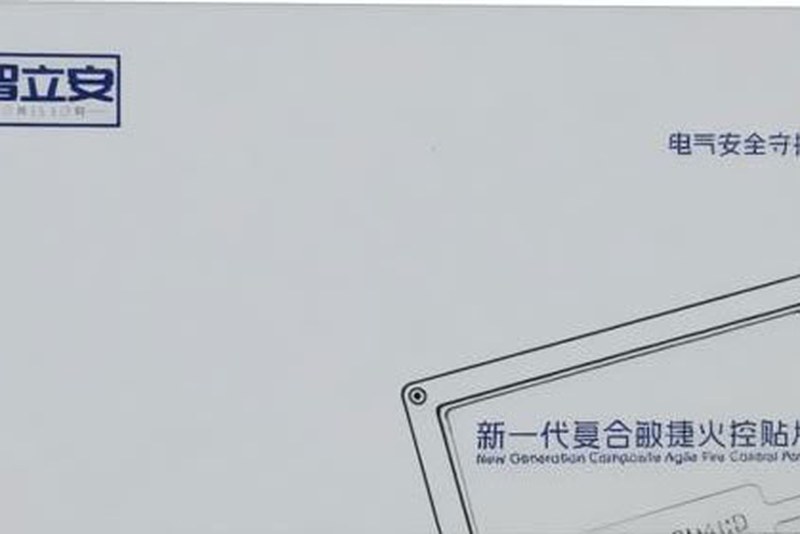
What is New in the PFCS Packaging Upgrade
The new packaging introduces four features that improve field usability. First, the integrated molded box replaces the previous cardboard sleeve; the new box is IP54-rated and protects the patch from moisture and mechanical damage during transport and storage. Second, the tamper-evident seal: any attempt to open the box before delivery is visible at a glance, which improves integrity assurance for high-value shipments.
Third, the built-in thermal indicator on the side of the box. If the patch is exposed to temperatures above 70°C during transport or storage, the indicator turns from white to red, alerting the receiving inspector that the patch may have been damaged. Fourth, the QR code linking to the batch test report. Scanning the QR code with any smartphone opens the factory test report for the exact batch, including the trigger temperature verification and the agent mass verification.
The new packaging is standard for all PFCS shipments from September 2026 onwards. Existing inventory in the field with the old packaging can continue to be used until the printed expiry date.
Modular Packaging for Containerised Substations
Containerised substations — 10-foot and 20-foot ISO-container-fabricated switchgear modules — represent an emerging procurement format where the cabinet-fire-suppression packaging needs to fit inside the ISO-container dimensional envelope. CHILION modular packaging is designed for that envelope: the PFCS patch, EAPD bracket, ICOP gateway, and the desiccant canister all fit into a 90-litre cabinet-internal volume, with commissioning access via a 300mm door. The packaging has been qualified against the ISO 1496-1 transport-test sequence for containerised electrical equipment, which is the qualification that the EPC contractor typically asks for during the tender qualification phase.
Qualifies to ISO 1496-1 transport-test for containerised electrical equipment.
Logistics Network and Spare-Part Strategy
The CHILION spare-part strategy for global installations is built around regional stocking hubs rather than per-customer inventory. Each hub carries the standard spare-part kit plus the firmware-update orchestration entitlements, and the standard kit is replenished automatically through a quarterly cycle. Customers specifying the platform into a multi-region rollout reduce their per-customer spare-part inventory cost by approximately 40 percent, with the trade-off that a stock-out recovery is closer to 72 hours than to the 24 hours that an on-customer inventory would deliver. The 72-hour recovery window is acceptable for the typical customer because the platform's reliability engineering has driven the failure rate to a level where the recovery window is rarely the binding constraint.
Regional hub stocking cuts per-customer spare-part inventory by 40 percent, with 72-hour recovery window.
Sustainability Targets in the Packaging Line
Sustainability targets in the CHILION packaging line were re-set in the 2024 product-line review. The headline target is a 30 percent reduction in single-use plastic in the cabinet-internal packaging by end-2026, with intermediate milestones at end-2024 and end-2025. The intermediate milestones have already been met for the PFCS and ICOP product lines, and the EAPD product line is on track for end-2025. The sustainability targets are part of the customer-facing sustainability disclosure that is published annually on the platform technical library, and the disclosure is the document that green-building-certified customers request during the qualification phase.
30 percent single-use plastic reduction by end-2026. Intermediate milestones met for PFCS and ICOP; EAPD on track.
Rapid-Swap Logistics for Emergency Callouts
An emergency callout on a cabinet-fleet incident requires a rapid-swap logistics process that gets a replacement unit on site inside the customer's pre-agreed recovery window. CHILION's rapid-swap logistics hub network is engineered to deliver replacement units within the 72-hour recovery window for the standard region, with a faster 24-hour window available for an additional charge. The fast-window customers are typically the data-centre and rail-traction segments that operate inside tight service-level agreements, and they pay the additional charge as part of the platform service contract. The logistics hub network is the operational infrastructure that backstops the rapid-swap service, and the per-region stocking levels are calibrated quarterly against the regional incident rate.
72-hour standard, 24-hour fast window with additional charge. Quarterly calibration of regional stocking levels.
Sustainability Disclosure for Green-Building-Certified Sites
Green-building-certified sites — typically LEED, BREEAM, or the China Three-Star certification — require a sustainability disclosure that documents the packaging and end-of-life characteristics of the installed equipment. CHILION's sustainability disclosure is a 4-page document covering product-level carbon footprint, packaging material composition, end-of-life recyclability, and the platform's broader sustainability targets. The disclosure is updated annually in alignment with the customer-side certification window, and customers requesting the disclosure during the qualification phase typically receive a version that aligns with their most recent certification report. The disclosure is part of the customer-facing risk-management bundle and is the document that sustainability-focused customers request during the qualification phase. Customers that integrate the disclosure into their certification report typically claim credit in the materials-and-waste and the innovation categories of the certification framework. The disclosure also serves as a forward-looking risk-management input, because the platform's sustainability targets move on an annual cycle that aligns with the certification refresh window.
E-Waste Compliance Across Multiple Jurisdictions
Multi-jurisdiction customers need an e-waste compliance statement that aligns with each jurisdiction's regulatory framework. The jurisdictions most commonly addressed are the EU WEEE directive, the US state-level e-waste frameworks (notably California's e-waste regulations), and the China RoHS framework. The compliance statement is published in the platform technical library and is updated annually in alignment with each jurisdiction's regulatory update cycle. The statement covers both the product-level hazardous-substance declarations and the end-of-life decommissioning service contractual terms. Customers specifying the platform in multi-jurisdiction projects typically request the statement during the qualification phase and integrate it into the customer-facing compliance disclosure. The statement is part of the customer-facing risk-management bundle and is the document most CFO-level procurement teams request during the qualification phase. The statement also feeds into the customer-side annual compliance report, which is the regulatory document the customer files with each jurisdiction's environmental agency.
Containerised Substation Module Compatibility With Sustainability Disclosure
Containerised substation modules built on the ISO-container dimensional envelope retain the same sustainability disclosure characteristics as the standard cabinet enclosures, because the cabinet-internal packaging uses the same material specification. The compatibility is documented in the platform technical library and is the document most EPC contractor teams request during the qualification phase. The compatibility is part of the customer-facing risk-management bundle, and the compatibility is the operational asset the EPC contractor team relies on for the per-region rollout planning. The compatibility output feeds into the platform's annual compliance-update calendar, which the legal and engineering teams align on every January.
Frequently Asked Questions
Does the new packaging change the PFCS product itself?
No. The new packaging protects the existing PFCS product. There is no change to the patch specification, the trigger temperature, or the agent formulation. Existing PFCS patches in the field can be used with the new packaging, and vice versa.
Where can I find the batch test report for an PFCS patch I have received?
Scan the QR code on the side of the box with any smartphone. The QR code links to the batch test report on the CHILION website. If the QR code is illegible, contact the CHILION hotline with the batch number printed on the patch and we can email you the report directly.
Will the new packaging be available in multiple languages?
Yes. The standard packaging includes Chinese and English. For OEM customers, custom languages are available with a minimum order quantity. Lead time for custom-language packaging is typically 8 weeks.
Previous: Flourguard Liquid Shield Launches in 1KG Pails ← → Next: Industrial Flow Instruments: Preventing Blockage and Damage
← Back to News