Published: 2026-08-03 · By CHILION Engineering Team
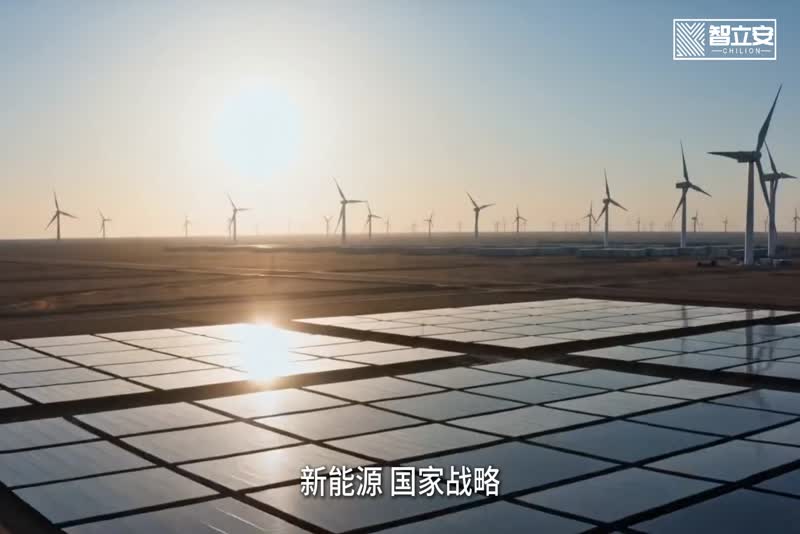
The electrical node distribution of a 100MW wind-solar-storage hybrid station exhibits the typical characteristics of being "wide, scattered, and remote." More than 150 inverters are spread across the PV array area, over 30 pad-mounted transformers are arranged along wind turbine towers and PV arrays, and more than 20 combiner boxes are distributed on the DC side. Together with energy storage battery cabins and PCS cabins, the total number of electrical nodes exceeds 200, covering an area of several square kilometers. A full manual inspection takes 3 days, while traditional fire protection systems can only cover open spaces in fixed buildings such as distribution rooms and cannot extend to every piece of equipment in the field.
The system architecture of the EAPD active electrical protection device in this scenario is divided into three layers. Perception layer: EAPD devices are deployed inside each inverter, pad-mounted transformer, combiner box, and energy storage cabin, with 13 built-in sensor channels (temperature NTC, infrared point temperature, CO concentration, smoke, humidity, dew point, vibration, arc detection, etc.). Data fusion and computation are performed locally, and alarm information is uploaded only during anomalies. Under normal conditions, a heartbeat is sent every 60 seconds, resulting in extremely low communication bandwidth usage. Edge layer: each power generation zone is equipped with an edge gateway that aggregates data from 20-30 EAPD devices in that area, executes local linkage strategies (such as triggering PFCS fire suppression units, linking circuit breaker tripping), and simultaneously uploads to the platform layer via fiber optic or 4G links. Platform layer: the ICOP intelligent integrated operations platform is deployed in the station's main control room or in the cloud, visualizing the status of 200+ nodes across the entire station on a single interface, supporting filtering and search by region, equipment type, and alarm level.
Communication link design needs to adapt to the special environment of new energy stations. Fiber optic is the preferred choice, and the existing SCADA fiber optic network within the station can be reused; remote equipment not covered by fiber optic uses 4G Cat.1 modules, which feature low power consumption and good signal coverage; for pad-mounted transformers with severe metal shielding, LoRa repeaters can be added to solve signal penetration issues. The EAPD device itself supports both Modbus RTU/TCP and MQTT protocols, and can be directly connected to the station's existing SCADA system or energy management platform without additional protocol conversion equipment.
The electrical fire patterns in wind-solar-storage scenarios differ from traditional distribution rooms. The main risk on the PV side is DC arcing — DC current has no zero-crossing point, and once an arc is generated, it will not self-extinguish, with sustained temperatures reaching over 3000°C, making it the primary cause of PV station fires. EAPD's arc detection module identifies arcs through high-frequency current harmonic characteristics, detecting anomalies within 0.5 seconds and linking with PFCS fire suppression units. The main risk on the energy storage side is battery thermal runaway — the combustible gases (CO, H₂, CH₄) released after thermal runaway of a single cell accumulate in the cabin and can cause deflagration when encountering an ignition source. EAPD's CO and VOC sensors can detect abnormal gas concentrations in the early stages of thermal runaway (15-30 minutes before the cell pressure relief valve opens), a time window sufficient to activate cabin ventilation or fire suppression procedures.
The unique challenge of the wind power side lies in its confined space and maintenance difficulties. The pad-mounted transformer space at the bottom of the tower is usually less than 10 cubic meters, with compact equipment and dense cables. In the event of a fire, personnel cannot reach the tower base for disposal in a short time. The passive fire suppression combination of EAPD plus PFCS is particularly valuable in this scenario — the device provides 24/7 online monitoring, and the PFCS patch automatically triggers at 140°C without requiring personnel on-site, external water supply, or fire linkage control power. Throughout the 20-year full lifecycle of the wind turbine, this system remains continuously online, and local fire suppression functionality remains effective even when communication is interrupted due to extreme weather such as typhoons or freezing conditions.
From a full lifecycle cost perspective, the investment in deploying 200 EAPD units plus matching PFCS patches in a 100MW wind-solar-storage station accounts for approximately 0.3% to 0.5% of the total station investment. The direct loss from a single energy storage cabin fire is usually in the millions of yuan, not including grid assessments, power generation losses, and reputational impact. At the architectural level, shifting safety protection from "centralized fire protection" to "distributed in-situ protection" is the evolutionary direction of new energy station safety design — each electrical node has independent sensing and fire suppression capabilities, does not rely on central system commands, and does not fail due to a single point of failure.
Get detailed technical specifications and customized solutions for the EAPD Active Electrical Protection Device
Contact CHILIONService Hotline: 400-8558-313